On August 18, 2026, U.S. Citizenship and Immigration Services (USCIS) announced that it is issuing updated guidance in the USCIS Policy Manual explaining how the agency will determine whether an individual applying for adjustment of status to lawful permanent residence is likely at any time to become a public charge.
USCIS said that it considers various factors when making public charge determinations, including age; health; family status; assets, resources, and financial status; and education and skills. USCIS also will consider receipt of means-tested public benefits, such as cash assistance for income maintenance, housing assistance, food stamps, financial aid for college, or any other similar benefit. For means-tested public benefits received before September 18, 2026, USCIS will only consider the person’s “receipt of public cash assistance for income maintenance and long-term institutionalization at the government’s expense.” For means-tested public benefits received on or after September 18, 2026, USCIS will consider “any and all benefits.” USCIS said it will review all relevant evidence in the record and make case-by-case decisions in the totality of the person’s circumstances.
A public charge bond is possible in an amount to be determined by the USCIS officer. A person invited by USCIS to do so in a Notice of Intent to Deny may submit a cash bond or a surety bond (posted through a surety company certified by the U.S. Treasury) by submitting Form I-945, Public Charge Bond.
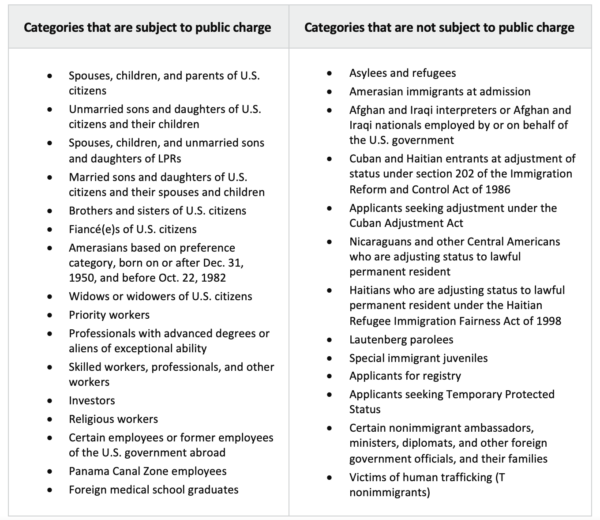
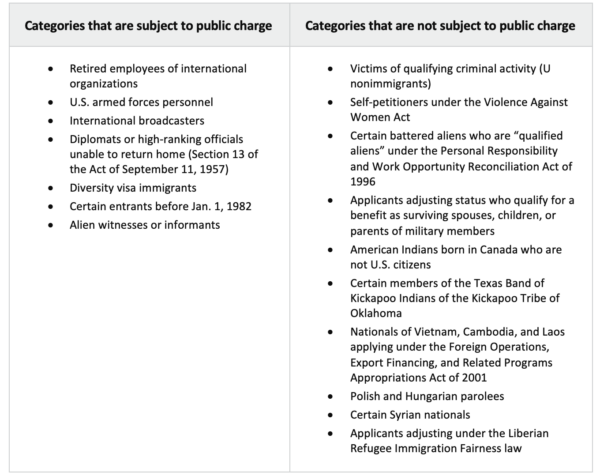
USCIS provided the following table: